Transitioning from traditional mops or standard vacuums to a smart floor washer represents a significant upgrade in home hygiene. However, the market is saturated with complex feature lists and proprietary jargon. Buyers evaluating these appliances often struggle to distinguish between essential performance drivers and non-essential gimmicks. The primary risk lies in investing in a high-end device creating more maintenance work than it actually saves. Nobody wants to deal with moldy rollers or rapid battery degradation after just a few months of use. This guide strips away marketing fluff to provide an objective, evidence-based evaluation framework. We aim to help buyers align specific technical features with real-world cleaning outcomes and long-term device scalability. By the end, you will confidently identify which specifications streamline your daily chores, ensuring your investment enhances your home environment seamlessly.
Key Takeaways
True wet and dry cleaning efficiency relies on constant-pressure roller mechanisms, not just suction power.
Odor prevention and base station automation (specifically air-drying and sanitization) are the most critical factors for long-term device hygiene.
Longevity is dictated by power infrastructure; detachable batteries significantly extend the usable life of the appliance.
Smart features like LED displays and voice prompts should be evaluated on how effectively they communicate real-time maintenance needs, rather than novelty.
Defining the Core Benchmark: True Wet and Dry Cleaning Capabilities
Modern households face a unique daily challenge. We frequently deal with the incomplete removal of mixed debris. Picture spilled liquids combined with solid food particles. Traditional vacuums choke on this mixture. Conventional mops just smear it around. This combination inevitably leads to streaking across hard floors or permanently clogged vacuum channels. To solve this, buyers must scrutinize how a machine handles simultaneous solid and liquid waste extraction.
Mechanics Over Suction Specs
Manufacturers love to advertise lab-tested Pascal (Pa) suction ratings on their packaging. However, these raw numbers remain secondary to actual roller contact pressure and fluid management. High suction alone cannot scrub stuck-on stains from kitchen tiles. Instead, a constant-pressure roller physically lifts grime off hard floors through mechanical friction. Downward force matters more than aerodynamic pull when dealing with sticky messes.
Furthermore, internal fluid dynamics dictate actual cleanliness. Continuous fresh-water flushing prevents the device from spreading dirty water across your floor. A robust wet and dry cleaning system relies on internal scrapers. These hidden blades continuously wring out dirty liquid before the brush hits the floor again. Dual-tank systems keep the clean water pristine. This mechanical separation guarantees you always wash your floors with fresh water.
Edge-to-Edge Cleaning Realities
You must perform an implementation check on any prospective model. Evaluate its baseboard clearance closely. Standard rollers often leave a one-inch gap along walls because the motor housing gets in the way. Dirt and pet hair accumulate rapidly in these blind spots. You eventually have to wipe these edges manually, defeating the purpose of the appliance.
A premium self-cleaning intelligent floor washer must feature an offset roller design. This structural tweak pushes the brush head flush against one or both sides of the machine. It minimizes uncleaned margins along your walls and kitchen cabinets.
Best Practice: Look for dual-edge cleaning capabilities. This allows you to maneuver the device against baseboards from either direction.
Common Mistake: Ignoring the physical bulk of the cleaning head. Bulky heads cannot fit under standard kitchen cabinet overhangs.
Automating Maintenance: Roller Self-Cleaning and Odor Prevention
The hidden cost of owning smart floor washers is the manual labor required to clean the machine itself. Without proper automation, you face the daily risk of bacterial growth and foul odors. Nobody enjoys pulling tangled hair or scrubbing grimy rollers by hand. True automation eliminates these unhygienic chores completely.
The Role of the Air-Drying Charging Base
Many baseline models boast automatic washing features. However, they carry a significant implementation risk. Centrifugal spinning alone leaves residual moisture behind. High-speed spinning removes surface water effectively. Yet, damp microfibers deep within the brush breed mildew rapidly in humid climates. You will notice unpleasant smells within days.
This reality makes a heated air-drying charging base a non-negotiable feature for serious buyers. Active thermal management pumps warm air directly through the damp brush head. This process evaporates deep-seated moisture within hours. It prevents mildew formation entirely. It also eliminates the need for manual roller removal and air-drying on a rack.
Sanitization via Electrolyzed Water
Assessing chemical-free sterilization is essential for homes with children or pets. Some machines require you to purchase proprietary, expensive cleaning solutions constantly. Advanced models utilize built-in modules to generate electrolyzed water directly from standard tap water. This non-toxic solution sanitizes both the internal plumbing and the floor surface.
The process alters the chemical structure of tap water temporarily. It creates mild, safe oxidizing agents. These natural compounds neutralize bacteria effectively during the washing cycle. Once the job is done, the fluid reverts to normal water. This leaves absolutely no sticky chemical residue on your hard floors.
Longevity and Scalability: Power Management Systems
Smart vacuums and washers frequently suffer from planned obsolescence. This occurs largely due to degrading lithium-ion batteries. When the internal cells inevitably lose their charge capacity, users often cannot service them. Consequently, a perfectly functional motor and chassis become useless electronic waste.
The Advantage of a Detachable Battery
Replacing the power source is drastically better than replacing the entire machine. Fixed internal batteries limit the overall device lifespan severely. A modular detachable battery changes this dynamic entirely. It significantly improves long-term usability and repairability.
Furthermore, it provides massive scalability for larger homes. You can swap a depleted battery for a fully charged one mid-routine. This strategy doubles your runtime instantly. You no longer have to wait three hours for a docking cycle to finish just to mop the last bedroom.
Runtime vs. Weight Trade-offs
Buyers must carefully analyze the balance between battery capacity and ergonomic reality. A larger battery certainly provides a longer cleaning runtime. However, a massive battery pack also creates a heavier machine. You must push and pull this water-loaded device across your house.
Pushing a heavy appliance strains the wrist and forearm over time. A modular approach solves this inherent physical conflict. You keep the appliance lightweight and highly maneuverable. When the battery runs low, you simply pop in a fresh one. This approach prioritizes user comfort without sacrificing operational capacity.
Evaluating "Smart" Features: Usability vs. Gimmick
Over-engineering can easily lead to user friction. Sometimes, digital interfaces distract from the physical cleaning task at hand. They might offer flashy visuals but provide no actionable data. We must evaluate smart features based on how they improve the actual cleaning experience.
Real-Time Feedback via LED Display
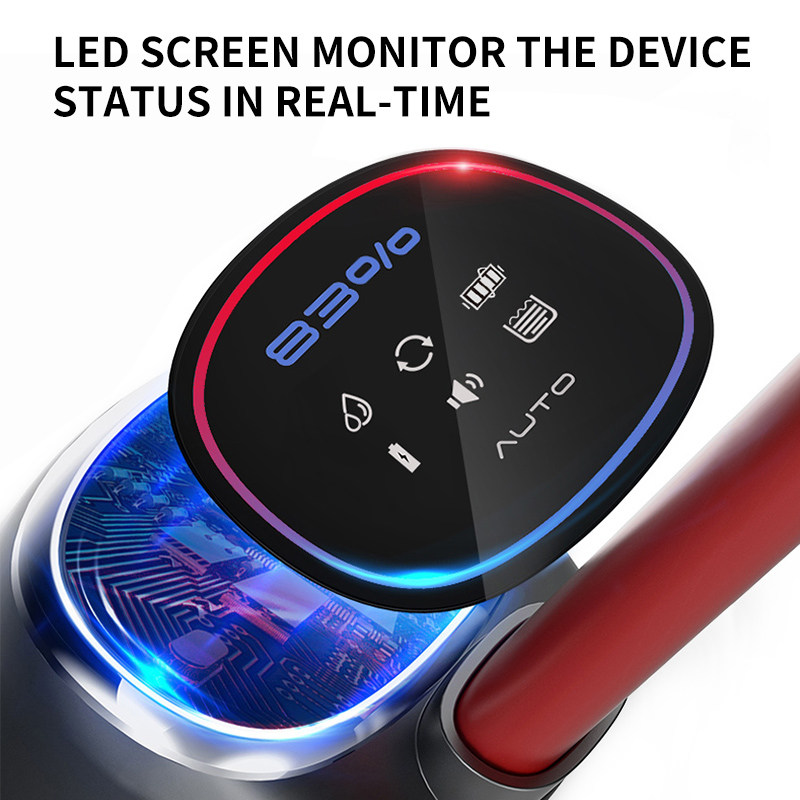
Not all digital metrics improve your cleaning routine. What information actually matters during a busy chore day? You need immediate clarity. Look for precise battery percentages rather than vague status bars. Dirt detection levels are also highly practical. They trigger auto-adjusting suction indicators, helping you focus on heavily soiled areas.
Empty clean water tank or full dirty water tank alerts prevent frustrating operational pauses. A well-designed LED display delivers this crucial data at a glance. It should sit comfortably in your line of sight. It must avoid overwhelming you with unnecessary animations.
The Practical Utility of a Voice Assistant
Many practical buyers apply a skeptical evaluation to audio features. Is it really necessary? Some dismiss audio prompts as mere novelty. However, rigorous use case validation reveals genuine, daily benefits.
A built-in voice assistant is highly effective for accessibility. It offers immediate troubleshooting while you are actively moving. Prompts like "Dirty water tank full" or "Roller tangled" provide instant clarity. You do not have to stop, bend down, and decipher a flashing red light. They eliminate the need to memorize cryptic error codes from a user manual.
Shortlisting Logic: How to Choose Your Floor Washer
Matching specific technologies to your unique household environment guarantees satisfaction. Use the evaluation matrix below to align your primary challenges with the most effective hardware features.
Floor Washer Evaluation Matrix
Household Profile
Primary Cleaning Challenge
Essential Feature Priority
Large Homes (2,000+ sq ft)
Mid-cleaning battery or water depletion
Modular batteries, maximum capacity clean/dirty water tanks
Moving forward, buyers should follow these specific next-step actions to finalize their shortlist:
Audit your specific floor plan. Calculate your total hard floor square footage. Evaluate your floor types for texture. Check the complexity of your baseboards and furniture legs.
Set a strict baseline requirement for maintenance automation. For example, mandate that any model you buy must feature an active thermal drying cycle to prevent mold.
Filter your prospective models based on user-replaceable parts. Prioritize machines offering easily swappable power cells and accessible replacement filters.
Conclusion
A high-quality intelligent floor washer should tangibly reduce your total household cleaning time. It must not simply shift your physical labor from mopping the floor to scrubbing a dirty machine. True efficiency emerges when the appliance maintains itself.
Anchor your final purchase decision heavily on base station automation. Focus on active drying and sanitizing capabilities. Prioritize device longevity through modular power options. Allow the digital interfaces and audio prompts to serve as secondary, albeit highly useful, quality-of-life enhancements. By sticking to these technical benchmarks, you will secure an appliance that delivers pristine floors for years to come.
A: It eliminates the grueling task of daily scrubbing and hand-wringing. However, no machine is entirely maintenance-free. Users still need to occasionally wipe the solid debris filter. You must also empty and rinse the dirty water tank promptly after each session. Doing so prevents sludge buildup and ensures the internal sensors maintain peak performance.
Q: Is an air-drying charging base safe for continuous operation?
A: Yes, reputable models are perfectly safe for continuous indoor use. These stations utilize low-wattage PTC heating elements. They operate at controlled, moderate temperatures. Built-in thermal sensors actively monitor the heat output. They shut down the heater automatically once the brush is completely dry, ensuring excellent energy efficiency and fire safety.
Q: Can electrolyzed water replace all chemical floor cleaners?
A: It effectively replaces daily chemical cleaners for standard sanitization and dust removal. The science of energized tap water excels at neutralizing surface bacteria safely. However, for extremely heavy, sticky grease or dried paint, it may fall short. You might occasionally need targeted enzymatic cleaners for those specific, stubborn messes.
Q: How long does a detachable battery typically last before needing replacement?
A: Most premium lithium-ion packs endure between 300 to 500 full charge cycles. After this point, you will likely notice a 20% reduction in total runtime. The cost-benefit analysis strongly favors swapping the battery. Buying a fresh power cell is vastly cheaper and more environmentally friendly than purchasing a completely new appliance.