You spend a third of your life sleeping. Unfortunately, you often unknowingly share your mattress alongside millions of microscopic pests. Dust mites and their allergenic byproducts thrive deep inside soft fabrics. They trigger frustrating respiratory issues and persistent skin allergies daily. Standard household vacuums simply cannot solve this problem. They lack the specialized agitation mechanics and sanitization capabilities required for true deep-fabric extraction.
As buyers realize they need a targeted device, they quickly face a tough bottleneck. They must choose between sustained high-wattage performance and the effortless maneuverability of modern battery-operated units. This primary decision hinges on a clear trade-off. You balance raw corded power against the sheer convenience of a cordless machine. We built this guide to establish a clear, evidence-based evaluation framework. You will learn how to choose the right model based on measurable parameters. We explore suction strength, heat levels, UV-C efficacy, and your specific home layout.
Key Takeaways
A specialized dust mite vacuum cleaner for mattresses and sofas requires more than just suction; it needs high-frequency vibration, UV-C light, and precise filtration to be effective.
Corded models deliver sustained high-heat output and consistent 15KPa+ suction, ideal for whole-house deep cleaning without battery anxiety.
A cordless dust mite vacuum cleaner offers superior agility for complex upholstery, cribs, and quick maintenance, but requires careful battery lifecycle management.
Feature benchmarks to look for: Smart dust sensors, dual dust cups, and HEPA filtration to prevent secondary allergen release.
Beyond Standard Vacuums: The Anatomy of a Mattress Vacuum Cleaner
Regular floor vacuums clean surface dust remarkably well. However, they fail completely at deep allergen removal on soft surfaces. A standard stick vacuum only cleans the top ticking of your bed. Dust mites live deeper inside the batting and foam layers. A specialized mattress vacuum cleaner tackles this core structural problem directly. It addresses the physical grip microscopic pests maintain on fibers.
We must understand the baseline requirements for a specialized extraction unit. An effective machine integrates three mandatory modules:
High-frequency agitation pads
Dedicated high-wattage suction paths
Medical-grade exhaust filtration
Mites cling tightly to fabric threads using tiny claws. Surface suction alone cannot break this stubborn bond. You absolutely need high-frequency agitation. Rapid beating pads strike the fabric thousands of times per minute. This intense physical vibration safely detaches mites, dead skin cells, and pet dander from deep beneath the surface layers.
Manufacturers also integrate UV-C mite removal technology. We evaluate this science transparently. A 253.7nm wavelength UV-C light definitely degrades pest DNA. It effectively stops their reproduction cycle. However, this technology only works given sufficient exposure time. You must move the device slowly across the fabric. UV-C acts as a powerful secondary defense. Physical suction and agitation always handle the primary extraction work.
Many premium models function as a highly effective hot drying vacuum. They apply extreme heat exceeding 130°F (55°C) directly to the surface. Ultrasonic heating components reduce mattress humidity quickly. Dust mites require high ambient moisture to survive and reproduce. Drying out the environment creates an inhospitable zone. It stops their breeding cycle instantly.
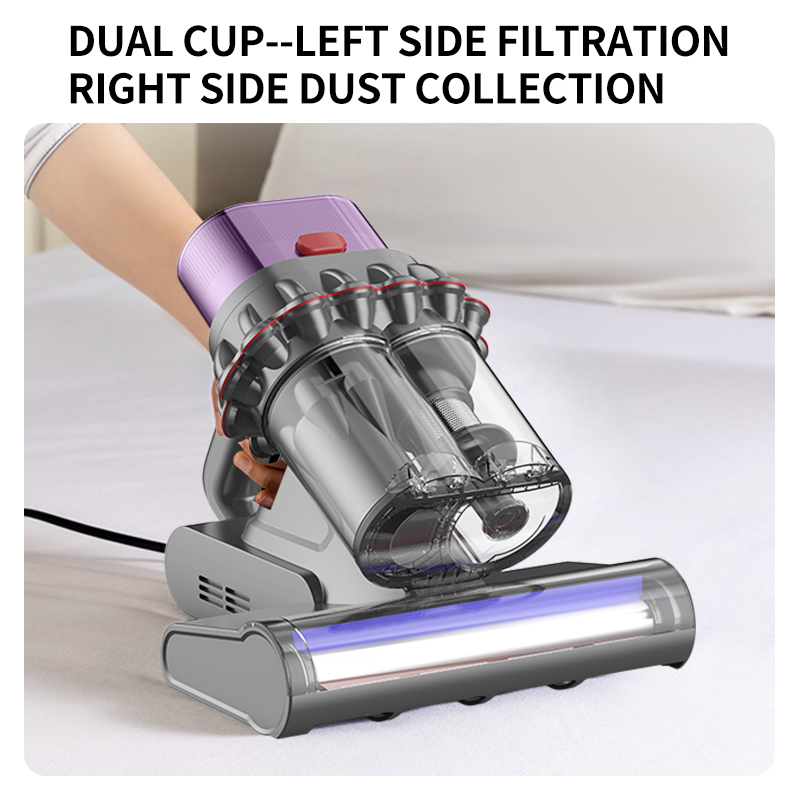
Finally, inspect the machine for a dual dust cup architecture. Single cups clog quickly under heavy fine dust loads. Separating the primary cyclone from the HEPA filter provides a massive engineering benefit. It prevents immediate filter blinding. You maintain maximum suction power much longer. You also empty the chambers far less frequently.
The Case for Corded: Maximum Power and Sustained Efficacy
Corded machines dominate the market when you demand raw, uncompromising power. They feature highly robust motors drawing 350W to 700W continuously. This massive energy translates directly to physical performance. You get a consistent 15KPa to 16KPa of suction power. This force easily lifts deeply embedded allergens through dense memory foam. Allergen removal remains an inherently slow, methodical process. You cannot rush it effectively.
Operational reality heavily favors plug-in devices for extensive deep-cleaning jobs. Homeowners often need to thoroughly clean a King-size bed in one session. They might tackle a large sectional couch right after. A corded unit shines brilliantly here. You never experience suction degradation. The motor pulls the exact same cubic feet per minute at minute one as it does at minute forty.
Plug-in models also excel at sustained heat delivery. Heating elements draw massive electrical current constantly. High-temperature output quickly drains standard lithium-ion batteries. A corded unit keeps its heating plates hot indefinitely. This sustained temperature dries out damp fabrics effectively. It provides maximum environmental control over pest populations.
We must also acknowledge the real implementation risks. You are strictly limited by physical cord length. You need nearby electrical outlets in every room. Power cords sometimes snag on complex furniture pieces. You must navigate carefully around table legs, headboards, and nightstands. Despite these minor inconveniences, corded power remains largely unmatched for aggressive deep extraction.
The Case for a Cordless Dust Mite Vacuum Cleaner: Agility and Adoption
The single best cleaning tool is the one you actually use. A cordless dust mite vacuum cleaner drastically lowers the friction of adoption. You grab it quickly off the charger. You clean much faster. If a vacuum feels heavy and requires unwinding a fifteen-foot cord, you will likely ignore it. Battery convenience makes weekly maintenance highly realistic.
Maneuverability represents a massive advantage in complex homes. Cordless models glide easily over highly contoured surfaces. You can sanitize carpeted staircases without constantly searching for new outlets. They work beautifully inside tight vehicle interiors. You can clean pet beds, plush toys, and irregular couch cushions effortlessly. A long cord quickly becomes a tripping hazard in tight spaces. Battery operation solves this spatial problem entirely.
Premium cordless units offset their lower base wattage smartly. They incorporate intelligent smart dust sensors. These optical sensors dynamically adjust suction based on detected debris levels. They ramp up motor power only when absolutely necessary. This smart regulation preserves crucial battery life during light cleaning passes. You get maximum power strictly where you need it most.
You should carefully evaluate the inherent risks before buying. Cordless models have strictly limited runtimes. You generally get 20 to 30 minutes per charge on standard settings. Batteries degrade naturally over a few years. The total usable lifespan ties heavily to overall battery health. Finally, cordless machines often feature reduced thermal heating capabilities. They simply lack the sustained energy reserves required for extreme heat generation.
Head-to-Head Evaluation: Which Upholstery Cleaner Fits Your Profile?
Choosing the right upholstery cleaner depends entirely on your specific household lifestyle. We break down the functional differences to provide absolute decision clarity. Severe allergy sufferers hold very different requirements than casual users doing light touch-ups.
Vacuum Type Evaluation Matrix
Evaluation Criteria
Corded Models
Cordless Models
Maximum Suction Power
Consistently High (15KPa - 16KPa+)
Variable (Relies on Smart Sensors)
Runtime Capability
Unlimited
20 - 30 Minutes
Heat Application
Sustained 130°F+ Output
Limited or Absent
Agility & Maneuverability
Restricted by Cord Length
Exceptional Access Anywhere
Ideal User Profile
Severe Allergy Sufferers
Multi-Surface Pet Owners
Severe allergy sufferers require absolute maximum extraction capabilities. If you do monthly deep-cleans, corded power proves completely non-negotiable. You need massive suction to pull deep-seated allergens out of thick memory foam. You cannot risk the battery dying halfway through sanitizing your primary sleeping environment.
Consider your daily home layout closely. Some homes have multiple small children and pets running around constantly. You encounter varying upholstery requiring quick, highly frequent spot-cleans. A cordless machine proves optimal for this chaotic layout. You can respond to unexpected messes instantly. You clean the living room furniture in five minutes flat.
Budget and longevity play crucial roles in this decision. Corded devices generally offer much better long-term durability. They provide significantly higher spec-to-price ratios across the board. You never worry about lithium-ion battery degradation over time. Cordless devices carry a distinct price premium. You pay extra for the sophisticated battery management technology.
Shortlisting Logic: 4 Non-Negotiable Specs to Verify Before Buying
Not every machine delivers on its lofty marketing promises. When evaluating a dust mite vacuum cleaner for mattresses and sofas, you must strictly verify four critical specifications. Do not rely on aesthetics. Base your final purchase decision on hard engineering data.
Suction Benchmark: Reject any model offering below 12KPa of suction force. Standard stick vacuums hit 10KPa, but dense fabrics heavily restrict airflow. You should actively target 15KPa or higher. High suction guarantees deep extraction through heavy quilting.
Filtration Integrity: The manufacturer must explicitly state True HEPA filtration in their manual. It must capture 99.97% of particles down to 0.3 microns. An exhaust leak ruins the entire cleaning process. It simply redistributes dangerous microscopic allergens directly into your breathing zone. Demand a completely sealed system.
Weight and Ergonomics: Users push and pull these units horizontally across flat surfaces. Examine the physical design carefully. Ensure the design balances the motor weight directly over the roller. Heavy, poorly balanced units strain your wrist quickly. A wider roller also means you make fewer passes across the bed.
Maintenance Realities: Look closely at the consumable parts. Assess the availability of replacement HEPA filters online. Check the exact replacement cost of fresh UV-C bulbs. Regular scheduled maintenance keeps peak performance high. A cheap machine becomes useless if you cannot find replacement filters next year.
Conclusion
Your ultimate power choice dictates your entire cleaning routine. Corded machines excel at performing deep, highly infrequent purges. Cordless units master light, highly frequent maintenance tasks across multiple rooms. Both technologies offer unique advantages for keeping allergens at bay.
We recommend defaulting to a robust corded unit for severe respiratory allergies. It serves as an uncompromised, highly effective primary defense system. Conversely, opt for a nimble cordless model if you already perform major deep cleans. It acts as the perfect supplement for incredibly fast, daily touch-ups.
For your immediate next steps, measure the physical distance from your bed to the nearest functional outlet. Next, check the exact weight and KPa specifications on your shortlisted models. Choose a sofa vacuum cleaner based on hard engineering data, not marketing hype.
FAQ
Q: Does UV-C mite removal actually kill all dust mites?
A: No vacuum kills 100% of pests. UV-C light damages their DNA effectively. This prevents future reproduction and breaks the breeding cycle. However, physical suction of the allergens and feces brings actual symptom relief. UV-C serves as a helpful secondary feature alongside strong motor suction.
Q: Can I just use my standard stick vacuum on my mattress?
A: Standard stick vacuums lack high-frequency beaters. They do not agitate the fabric sufficiently to release gripping mites. They also lack dedicated UV-C sanitization lights. Furthermore, many standard vacuums lack proper exhaust sealing, which blows microscopic allergens right back into your face.
Q: How often should I use a mattress and sofa vacuum cleaner?
A: We recommend a realistic baseline schedule. You should use the device bi-weekly for general household maintenance. Severe allergy sufferers need a much stricter routine. They should vacuum their primary sleeping surfaces weekly to minimize frustrating symptom flare-ups.
Q: Does ultrasonic technology really deter mites?
A: Ultrasonic technology emits high-frequency sound waves. The premise claims these silent waves disrupt mite nervous systems safely. It maintains some objective merit as a passive deterrent. However, physical extraction always outweighs deterrence. Prioritize strong motor suction and physical beating over ultrasonic features.