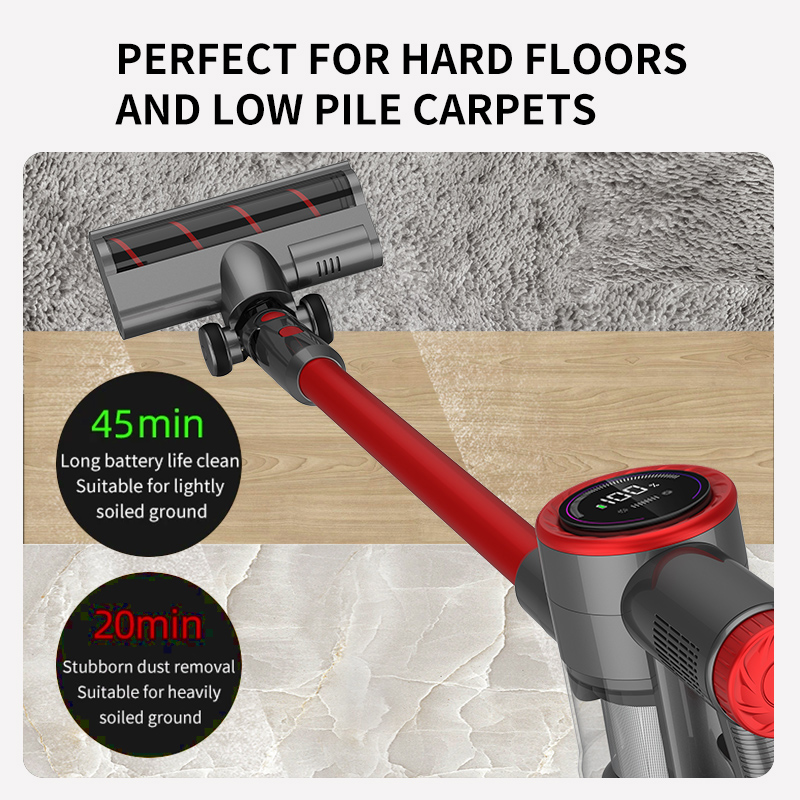
Historically, buyers viewed corded uprights as the only machines capable of pulling embedded dirt from deep carpets. People relegated battery-operated models strictly to hard floors or quick, superficial touch-ups. A deep-seated skepticism existed regarding their real cleaning power and reliability. However, modern engineering has completely changed this dynamic. Advanced digital motors and specialized brush heads mean a cordless vacuum cleaner can clean carpets highly effectively today. Real-world performance depends heavily on specific design mechanics, such as brush roll type and motor efficiency, rather than just advertised suction metrics. Choosing the wrong specification can still leave carpets dusty and unhygienic. This article serves as an objective evaluation guide. We will help you determine if a battery-powered model fits your specific flooring. You will learn exactly how to match vacuum technology to your daily household demands.
Key Takeaways
The Verdict: Yes, high-end and mid-range cordless vacuums are highly effective on low-to-medium pile carpets, often matching the surface-cleaning power of corded models.
The Technology Factor: Effective carpet cleaning relies more on motorized brush head agitation than raw suction power.
The Battery Reality: Deep cleaning carpets requires higher suction modes, which severely reduces standard battery life (often dropping a 60-minute runtime to 10–15 minutes).
The Limitation: Homes with extensive high-pile or plush wall-to-wall carpeting may still require a traditional plug-in upright for optimal deep cleaning.
The Reality Check: Cordless vs. Traditional Upright on Carpets
Extracting dirt from woven carpet fibers is a complex physical process. It requires three critical components working in perfect harmony: suction to lift the debris, airflow to carry it into the dustbin, and agitation to break it loose from the textile base. Passive suction alone cannot clean a woven surface effectively. You need physical force to disturb the settled dust, pet dander, and microscopic allergens trapped below the surface layer.
Traditional upright vacuums excel at this demanding task because they utilize a continuous power supply. Manufacturers can install heavier, larger motors without worrying about battery drain. They can equip these machines with highly aggressive brush rolls. The continuous electricity from a wall outlet allows brute-force extraction across large homes, ensuring consistent power from the first room to the last.
Conversely, modern battery technology has leveled the playing field significantly over the past decade. Advanced digital motors now generate intense rotational speeds previously unseen in battery devices. Paired with highly specialized cleaner heads, a stick cordless vacuum cleaner achieves comparable physical agitation. These lightweight units provide targeted, intense suction exactly where you need it most. They eliminate the bulk of traditional models while maintaining high performance.
Buyers must evaluate these two approaches carefully through a practical decision lens. You trade the sustained, brute-force power of a corded unit for incredible convenience. Cord-free maneuverability encourages much more frequent cleaning. Frequent cleaning often yields better overall hygiene than relying on exhausting, occasional deep cleaning sessions. You effortlessly navigate around furniture, transition between rooms quickly, and address messes the moment they happen.
Key Technologies That Make a Cordless Vacuum Cleaner Effective
Raw electrical power means very little if a vacuum cannot effectively agitate the floor surface. You must look for specific technological features explicitly designed for woven floors to guarantee a clean home.
First, motorized brush rolls act as the primary agitator, and they are non-negotiable for carpeted homes. Passive suction fails on carpet because dirt and hair cling tightly to the synthetic fibers. You need stiff nylon bristles driven by an independent motor housed directly inside the floorhead. These bristles physically beat the dirt out of the carpet pile, forcing it upward into the suction path. Without an active agitator, you only clean the very top layer, leaving a dense reservoir of allergens behind.
Second, evaluate the suction power using the Air Watts (AW) metric. Air Watts measure the actual airflow and suction combined, providing a much more accurate representation of cleaning capability than basic wattage. Effective carpet extraction generally requires a baseline of at least 100 AW when operating in "Boost" or "Max" mode. Anything less may leave heavier debris, such as sand or small pebbles, buried deep within the rug fibers.
Third, prioritize models featuring auto-suction adjustment powered by smart sensors. Premium cordless vacuums detect floor-type changes automatically using infrared or resistance sensors. When you move from a smooth kitchen floor to a living room rug, the vacuum instantly increases its suction power. This intelligent feature optimizes both cleaning performance and battery efficiency, ensuring you do not waste energy on bare floors.
Finally, consider anti-tangle technology heavily. If you have pets or long-haired family members, tangled brush rolls cause intensely frustrating maintenance interruptions. Modern units utilize combed or conical brush rolls designed specifically to force hair toward the suction tube naturally. They prevent the bristles from jamming, keep the motor running smoothly, and save you from manually cutting hair off the roller.
How Carpet Pile Height Impacts Cleaning Performance
Carpet pile refers to the length, thickness, and density of the fabric fibers. Your specific flooring type directly dictates how well a battery-powered vacuum will perform. Understanding this physical interaction helps set realistic expectations for your daily chores.
Low-Pile Carpets & Rugs
These surfaces are highly cooperative and represent the easiest challenge for modern vacuums. Most cordless units handle them with absolute ease. You can typically use standard or "Eco" power modes to lift surface debris effectively. The spinning brush roll encounters minimal physical resistance, which keeps the motor highly efficient and preserves battery life. Dirt rarely has space to hide deeply in low-pile rugs, making extraction swift and straightforward.
Medium-Pile Carpets
These floors are generally effective to clean but require more deliberate effort. You absolutely need motorized brush rolls here to separate the thicker fibers. You will also need occasional bursts of "Boost" mode to pull out deeply embedded debris. The thicker fibers easily hide heavier dirt particles near the base backing. Regular, slow passes allow the agitator enough time to beat the dust upward into the airflow stream.
High-Pile and Frieze (Shag) Carpets
This represents the highest risk category for any battery-operated model. Thick, plush fibers can easily bog down the motorized brush roll of a standard unit. When the brush roll faces too much friction, internal auto-shutoff safety features trigger instantly. The machine stops completely to protect the motor from overheating and the drive belt from snapping. Even if the unit continues running, the standard bristles often fail to reach deep-seated dust, merely skimming the top of the shag.
Carpet Pile and Vacuum Compatibility Summary
Carpet Type
Pile Length
Cordless Vacuum Effectiveness
Recommended Suction Mode
Low-Pile
Less than 1/4 inch
Excellent
Eco / Normal Mode
Medium-Pile
1/4 to 1/2 inch
Very Good
Auto / Occasional Boost
High-Pile (Shag)
Over 1/2 inch
Poor to Fair
Max / Boost Mode (Risk of shutoff)
The Battery Life Trade-Off (The "Boost Mode" Trap)
Transparency is essential when discussing battery life, as it represents the biggest hurdle for new buyers. A massive gap exists between marketing claims and actual home use realities.
Brands routinely advertise impressive runtimes, often stating devices last "Up to 60 minutes." However, they achieve these numbers under highly controlled laboratory conditions. They test them on the lowest possible suction setting. They also frequently test them without a motorized floor tool attached. This metric rarely applies to actual carpet maintenance, where active agitation is mandatory for success.
Deep cleaning carpets usually demands "Max" or "Boost" mode to generate sufficient Air Watts. The increased airflow and aggressive brush spinning consume enormous amounts of energy simultaneously. The battery must power two separate heavy-duty motors: the main digital suction motor and the floorhead agitator motor.
Be prepared for a steep runtime drop when cleaning heavily soiled carpets. Engaging Boost mode typically drains a fully charged lithium-ion battery in just 8 to 15 minutes. This strict limitation forces you to rethink your cleaning strategy entirely.
This reality impacts overall household cleaning workflows significantly. If you have a large home with extensive wall-to-wall carpeting, you might need to purchase secondary batteries to finish the house in one session. Alternatively, you can adopt a modern "clean as you go" approach. Vacuuming one or two rooms daily prevents the battery from dying mid-task and keeps your home consistently clean.
Evaluation Framework: How to Choose the Right Model for Carpets
Choosing the right model requires matching technical specifications to your actual living space. Use this practical shortlisting logic to guide your purchase and avoid costly buyer's remorse.
Review this structured checklist when assessing carpet compatibility:
Brush Head Design: Look specifically for "High Torque" or "Carpet-specific" cleaner heads. Avoid soft fluffy rollers, as manufacturers design those strictly for capturing fine dust on hard floors. Stiff nylon bristles are mandatory for separating carpet fibers and releasing trapped dirt.
Removable/Swappable Batteries: This feature is absolutely essential for homes with more than two rooms of carpet. A click-in, quick-swap battery completely mitigates runtime anxiety. It allows you to double your deep-cleaning time without waiting three hours for the unit to recharge.
Dustbin Capacity: Carpets hold significantly more hidden dirt than hard floors. We strongly recommend seeking a bin size of at least 0.5 to 0.7 liters. Smaller bins fill up incredibly fast on woven surfaces, requiring constant, frustrating trips to the trash can mid-clean.
Weight Distribution: Pushing against carpet friction requires noticeably more physical effort than gliding over smooth tile. Ensure the main motor unit is not overly top-heavy. Poorly balanced machines quickly fatigue your wrist, arm, and shoulder during extended cleaning sessions.
Conclusion
A cordless vacuum is highly effective for carpets under the right structural conditions. You must consciously select a model equipped with a motorized bristle brush designed for physical agitation. You also need to fully understand the strict battery limitations when using maximum suction modes. The undeniable convenience of these lightweight devices often outweighs their runtime constraints for most modern homes.
Before making a final purchase, critically assess your home's exact hard-floor-to-carpet ratio. Measure your carpet pile height to avoid frustrating compatibility issues. Once you evaluate these physical factors, you can comfortably decide on your budget and determine the required battery ecosystem to keep your home pristine.
FAQ
Q: Can a cordless stick vacuum pick up pet hair from carpets effectively?
A: Yes, provided it has an anti-tangle brush roll and sufficient suction. Pet hair relies heavily on physical agitation to unweave it from carpet fibers. A motorized floorhead featuring stiff bristles will easily pull embedded hair out of most low and medium-pile carpets.
Q: Does a cordless vacuum completely replace a deep carpet cleaner?
A: No. Cordless vacuums perform dry extraction, which is considered basic maintenance cleaning. They remove loose dust, dirt, and hair. They do not replace the wet extraction or carpet washing needed to remove stubborn stains, spills, and deeply embedded grime.
Q: Why does my cordless vacuum stop spinning on thick carpet?
A: This happens due to a motorized safety cut-off switch. Thick carpets cause excess friction against the bristles. The vacuum intentionally shuts off the brush roll to prevent the internal motor from burning out or snapping the drive belt.